
Dental implant healing happens in stages, and each stage serves a different purpose. The gums may look improved within a week or two, but the jawbone usually needs several months to bond with the implant before a permanent crown, bridge, or denture is attached. ([my.clevelandclinic.org](https://my.clevelandclinic.org/health/treatments/10903-dental-implants?utm_source=openai))
What happens before the implant is placed?
Healing begins with treatment planning, not the surgery itself. The mouth is checked for active infection, gum disease, decay, bite problems, and the amount of available jawbone. Dental imaging helps determine whether the implant can be placed immediately or whether additional healing is needed first.
If a tooth has recently been removed, the extraction socket may need several weeks or months to heal. In some cases, a bone graft is placed to rebuild lost bone. A graft may require its own healing period before implant placement, which can extend the overall timeline. ([my.clevelandclinic.org](https://my.clevelandclinic.org/health/treatments/22120-tooth-extraction?utm_source=openai))
For residents in Erie, seasonal routines may affect preparation and recovery planning. Winter weather, slippery sidewalks, and indoor heating can make it useful to arrange transportation and keep recommended soft foods available at home after surgery. These practical details do not change the biology of healing, but they can make the first few days easier.
What should a person expect during the first few days?
The first stage is soft-tissue healing around the surgical site. Mild bleeding, tenderness, swelling, or bruising can occur, with swelling often most noticeable during the first 24 to 48 hours. Discomfort commonly improves over several days, although the exact experience depends on the number of implants and whether bone grafting or tooth removal occurred at the same time. ([guysandstthomas.nhs.uk](https://www.guysandstthomas.nhs.uk/health-information/dental-implants/after-having-dental-implant?utm_source=openai))
Typical instructions may include:
- Eating softer foods temporarily
- Avoiding strenuous activity for a short period
- Keeping pressure on gauze if minor bleeding occurs
- Taking only medications recommended or approved for the individual situation
- Cleaning the rest of the mouth while protecting the surgical area as directed
- Avoiding smoking or vaping, which can interfere with healing
Postoperative instructions vary. For example, some people may be told not to brush directly over the surgical site for a limited period, while others may receive specific rinsing instructions. The written instructions provided after surgery should take priority over general information.
When do the gums heal?
The gum tissue often becomes substantially more comfortable within one to two weeks. Stitches may dissolve on their own or may be removed during a follow-up visit. A review during this period allows the dental team to check the incision, look for infection, and confirm that the soft tissue is closing properly. ([guysandstthomas.nhs.uk](https://www.guysandstthomas.nhs.uk/health-information/dental-implants/after-having-dental-implant?utm_source=openai))
A common misconception is that a healed-looking gum means the implant is ready for a permanent tooth. The surface tissue can appear normal while the deeper bone is still remodeling. A person may feel well before the implant has developed enough support for normal chewing forces.
What is osseointegration?
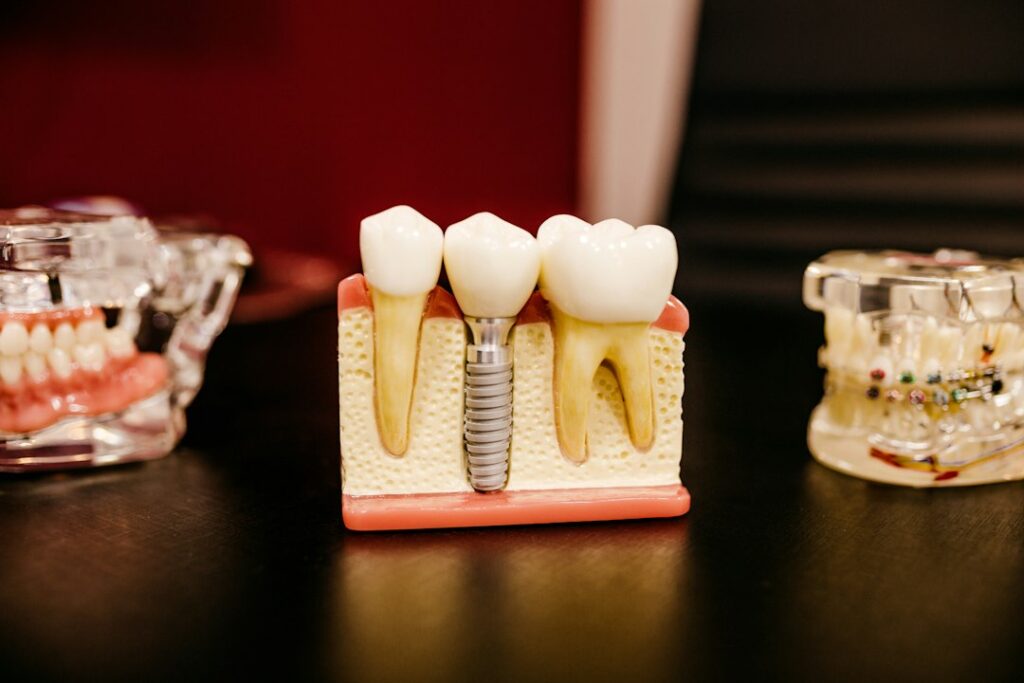
Osseointegration is the process in which living jawbone bonds closely with the implant surface. It is the central healing stage because the implant must become stable in the bone before it can reliably support a restoration.
This process is not the same as a bone “growing around” an implant like cement. Bone is continuously remodeled, and the quality of the connection depends on factors such as bone density, implant location, surgical stability, general health, oral hygiene, and whether grafting was required.
The timeline varies. Many implants are allowed to integrate for approximately three to six months, while some cases may require longer. Published patient guidance also describes a broader range of about three to nine months, depending on individual healing and treatment complexity. ([my.clevelandclinic.org](https://my.clevelandclinic.org/health/treatments/10903-dental-implants?utm_source=openai))
What can slow or complicate healing?
Healing may take longer when the procedure includes bone grafting, multiple implants, a sinus-related procedure, or placement in an area with limited bone. Smoking and vaping can also impair the healing environment. Poor plaque control, uncontrolled gum disease, certain medical conditions, and some medications may affect treatment planning or recovery.
This does not mean that a person with a medical condition cannot receive an implant. It means the treatment plan may need to account for the condition, medications, blood sugar control, bone health, or other risk factors.
Implant mobility is not expected during normal healing. Increasing pain after initial improvement, persistent swelling, pus, fever, a bad taste that does not resolve, continued bleeding, or an implant that feels loose should be reported promptly to the treating dental team. Numbness or altered sensation also deserves attention, particularly if it persists or worsens.
What happens after the implant bonds with the bone?

Once integration is confirmed, the restorative phase begins. Depending on the surgical approach, the implant may already be visible through the gum, or a minor procedure may be needed to uncover it and attach a healing cap or abutment.
The abutment connects the implant to the final crown, bridge, or denture. The gum may need additional time to shape around the restoration, especially in visible areas. Impressions or digital scans are then used to design the replacement tooth or teeth. The final restoration may require more than one visit for fitting, adjustment, and bite checks. ([my.clevelandclinic.org](https://my.clevelandclinic.org/health/treatments/10903-dental-implants?utm_source=openai))
A temporary tooth may be used during part of the process, but not every patient receives one. Placement depends on the implant location, stability, appearance, bite forces, and the type of restoration planned.
How should an implant be cared for after healing?
A healed implant still needs daily cleaning and regular evaluation. Although the implant itself cannot develop a cavity, the surrounding gums and bone can become inflamed if plaque accumulates. Implant crowns, bridges, and removable dentures also require cleaning according to their design.
Helpful long-term habits include:
- Brushing twice daily with careful attention to the gumline
- Cleaning between teeth and around the implant as instructed
- Managing gum disease and tooth decay elsewhere in the mouth
- Avoiding tobacco products
- Attending routine dental examinations
- Reporting bleeding, swelling, tenderness, or changes in the way the restoration fits
The final tooth may feel different from a natural tooth because an implant does not have the same periodontal ligament and sensory feedback. It can function well, but biting forces may feel less intuitive at first. A gradual return to normal eating and careful attention to the bite can help identify problems early.
Is every healing timeline the same?
No. A straightforward single-tooth implant may progress more quickly than treatment involving extraction, grafting, multiple implants, or a removable implant-supported denture. The upper and lower jaws also differ in bone density, and healing can vary substantially between individuals.
The most useful way to think about the timeline is in layers: the gums often heal in roughly one to two weeks, the implant may need several months to integrate with bone, and the final restoration can require additional visits after integration is confirmed. A slower timeline does not automatically mean something is wrong; however, worsening symptoms or implant movement should not be ignored.